How to Improve Your Awareness Around Motorcycles and Two-Wheeler Traffic
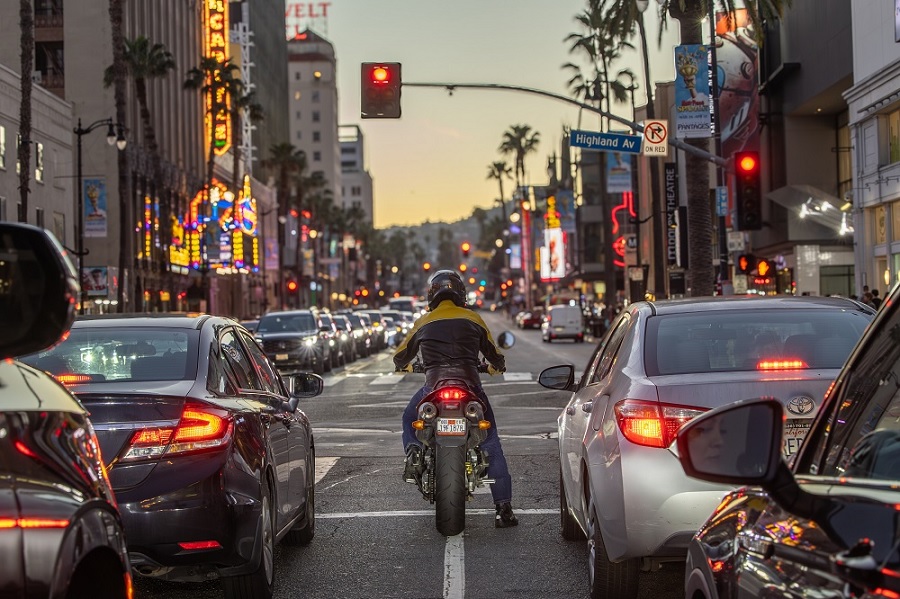
Driving a modern passenger vehicle on busy American roads can easily feel like operating inside an insulated capsule. With thick steel pillars, laminated acoustic glass, advanced climate control, and immersive sound systems, contemporary cars do an exceptional job of isolating drivers from the outside world. Unfortunately, this heavy isolation creates a profound psychological bubble. When you are cocooned in a multi-thousand-pound vehicle, it becomes remarkably easy to forget that the highway is a shared, multi-dimensional ecosystem.
Among the most vulnerable participants in that ecosystem are riders of motorcycles, scooters, and other two-wheeled vehicles. Because a motorcycle presents a remarkably narrow frontal silhouette, it naturally evades the human brain’s standard pattern-recognition software, which is primarily wired to look for the massive rectangular profile of other cars and trucks. Enhancing your situational awareness around two-wheeler traffic requires a deliberate shift in your visual scanning habits, a deeper understanding of motorcycle dynamics, and a commitment to dismantling the blind spots that lead to devastating collisions.
Understanding the Psychology of Inattentional Blindness
To improve your awareness on the road, you first need to understand how the human brain processes visual input while driving. Psychologists refer to a phenomenon known as inattentional blindness—a state where you are physically looking directly at something, but your brain fails to register its presence because it is not actively expecting to see it.
When you scan an intersection before making a left turn, your brain is subconsciously hunting for oncoming cars. Because a motorcycle occupies a fraction of that expected visual space, it can literally hide behind the A-pillar of your car or blend seamlessly into the complex visual clutter of background signs and buildings. Your eyes receive the light photons, but your cognitive processing center dismisses them. Overcoming inattentional blindness requires conscious effort. You must force your eyes to actively scan for shapes and movements that do not fit the standard car-shaped profile, treating every blind spot and gap in traffic as a potential hazard.
Mastering Active Mirror Management and Head Checks
Most drivers settle into a lazy routine regarding mirror checks. They adjust their rearview and side mirrors once when they buy the vehicle and rarely touch them again, resulting in massive zones of invisibility.
Expanding Your Side Mirror Geometry
A common mistake is positioning side mirrors so they show a significant portion of your own car’s flanks. When your mirrors are adjusted this way, your blind spots are massive. To capture two-wheeler traffic effectively, your side mirrors should be angled outward until you can barely see the edge of your own vehicle. This adjustment creates a panoramic sweep of the adjacent lanes, allowing you to track a fast-moving motorcycle as it approaches from behind before it slips into your physical blind spot.
The Imperative Shoulder Check
Even with perfectly adjusted mirrors, there is a physical area directly beside your rear quarter-panel that glass cannot capture. Because a motorcycle can accelerate with blistering speed and occupy a narrow lane position, it can easily tuck itself into this gap. Never rely on your side mirrors alone when changing lanes. Every single lane change must be preceded by a swift, deliberate physical head check. Turning your head for one second to glance over your shoulder shatters the protective vehicle bubble and brings fast-moving two-wheelers into sharp, undeniable focus.
Recognizing the Unique Physics and Lane Positioning of Motorcycles
Motorcyclists do not navigate the roadway the same way car drivers do. While a passenger vehicle is stabilized by four wide contact patches, a motorcycle balances on two tires and relies heavily on lean angles and dynamic physics to navigate the asphalt. Understanding these physical realities allows you to predict a rider’s movements before they happen.
The Logic Behind Lane Positioning
If you notice a motorcyclist riding on the far left or right side of a single traffic lane rather than dead center, they are not being reckless or aggressive. They are utilizing strategic lane positioning. Riders move around within their lane to avoid slick patches of spilled oil in the center of the road, maximize their visibility around the blind spots of the cars ahead of them, and position themselves to be clearly seen in the rearview mirrors of surrounding traffic. Respect these positions; never attempt to squeeze past a motorcycle in the same lane or crowd their personal space.
Anticipating Surface Hazard Responses
Because a motorcycle’s stability is easily compromised by road imperfections, riders must react aggressively to surface hazards that a car driver barely notices. A pothole, a metal expansion joint on a bridge, a patch of loose gravel, or a slick steel manhole cover can cause a motorcycle to suddenly swerve or brake hard. When you are following a motorcycle, always maintain a much greater following distance than you would behind a car. Giving them a minimum of four to six seconds of following distance ensures that if the rider has to make an emergency maneuver around a road hazard, you have the reaction time and physical space to respond safely.
Navigating Intersections: The Danger Zone for Left Turns
Statistically, the most dangerous scenario for a motorcyclist involves a passenger vehicle making a left-hand turn across oncoming traffic. In a tragic majority of these collisions, the driver of the car tells responding officers, “I just didn’t see them.”
When you are waiting at an intersection to make a left turn against oncoming traffic, you must exercise extreme discipline. Never commit to a left turn based solely on the assumption that a gap in traffic is clear because you do not see a large car. Take an extra two seconds to actively scan the horizon for the smaller headlight signature of a motorcycle. Furthermore, remember that motorcycles are harder to gauge in terms of speed and distance. Because of their narrow profile, a motorcycle traveling at fifty miles per hour can easily appear to be moving much slower or farther away than it actually is. When in doubt, hold your position and wait for the intersection to clear completely.
Sharing the Road in Heavy Traffic and Congestion
When highway traffic slows to a crawl or comes to a dead stop, the dynamic between cars and motorcycles shifts dramatically. In heavy congestion, the risk of a rear-end collision for a motorcyclist increases exponentially.
If a distracted driver fails to stop in time behind a car, the worst-case scenario is usually a crumpled bumper and a minor insurance claim. If that exact same distracted driver rear-ends a motorcycle, the rider is crushed directly between two heavy steel vehicles. When you are driving in stop-and-go traffic, check your rearview mirror frequently. If you see traffic grinding to a halt ahead, tap your brakes early to flash your lights and create a clear warning signal for any motorcycle approaching rapidly from behind. Leave extra space ahead of you so you have room to creep forward if you notice an inattentive driver failing to slow down in your mirror.
Eliminating Cabin Distractions to Reclaim Auditory Awareness
Your eyes are not your only tool for detecting two-wheeler traffic. Your ears play a vital supplementary role in situational awareness, particularly in dense urban environments or heavy highway traffic.
Modern car interiors are heavily soundproofed, and when combined with loud music, podcasts, or phone conversations, they effectively sever your auditory connection to the road. A loud exhaust note, a sudden downshift, or the distinct whine of a motorcycle approaching in your blind spot can often be heard well before the rider comes into your field of vision. By keeping your audio system at a reasonable volume and refusing to let mobile devices fracture your attention, you restore your ability to use sound as an early-warning radar system.
Sharpening your awareness around motorcycles and two-wheeler traffic requires a conscious rejection of driving complacency. It is an active discipline built on understanding human visual limitations, respecting the vulnerable physics of two-wheeled travel, and refusing to let the comfort of a passenger cabin dull your operational alertness. By expanding your mirror scans, honoring safe following distances, and actively hunting for riders before making maneuvers, you transform yourself into a truly defensive driver who helps make the open road safer for everyone.