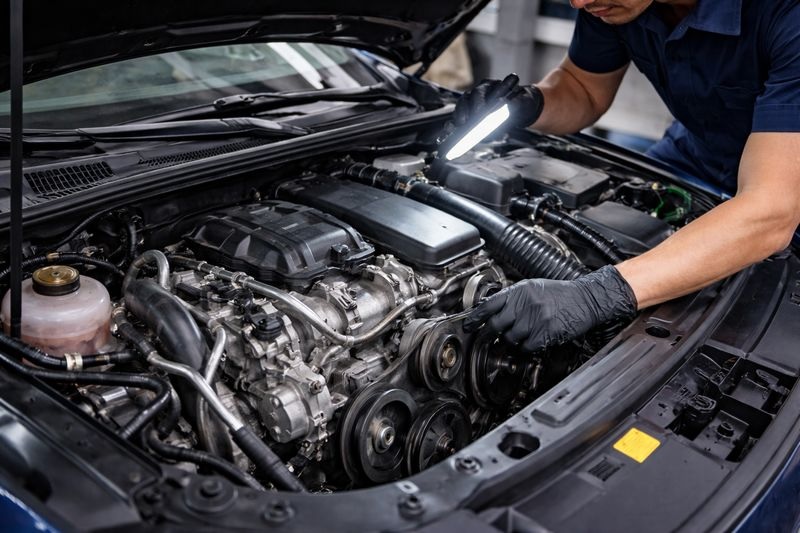
Understanding the Importance of Accurate Diagnosis for Intermittent Car Faults
Every automotive technician dreads the dreaded customer description: it only happens sometimes. A vehicle is an extraordinary marvel of modern engineering, composed of thousands of interconnected sensors, microprocessors, mechanical linkages, and high-pressure fluid systems that must harmonize in absolute synchronization. When a component fails catastrophically—when a timing belt snaps, a starter motor burns out, or a tire blows—the diagnosis is instantaneous and absolute. The problem is present, visible, and easily targeted.
However, a completely different category of automotive failure plagues service bays across the country: the intermittent fault. This is the ghostly hesitation that occurs only when the engine is warm and you are turning left onto a highway. It is the random check engine light that illuminates during a rainstorm and mysteriously vanishes by the time you pull into your driveway. Attempting to track down an issue that refuses to present itself on demand is one of the most frustrating challenges in vehicle maintenance. Inexperienced repair facilities often respond to these ghost faults with a reactive, shotgun approach of blindly replacing expensive parts, creating a cycle of wasted money and un-repaired frustration. True automotive expertise relies on methodical, diagnostic precision to hunt down intermittent gremlins at their root.
Why Intermittent Faults Defy Standard Diagnostics
To understand why intermittent problems are so difficult to resolve, you must first understand how a modern vehicle’s computer system thinks. Sensors throughout the car constantly report data back to the Engine Control Module in fractions of a second. When a hard failure occurs, a sensor goes completely dead or registers a permanent out-of-range value, triggering a diagnostic trouble code and illuminating a warning light on the dashboard.
An intermittent fault, by definition, does not stay broken long enough to establish a permanent record. A loose wiring terminal might momentarily lose connection when the vehicle hits a sharp pothole, causing a microsecond drop in voltage that cuts spark to a cylinder. By the time the vehicle settles and the technician plugs a scanner into the dashboard port, the connection has re-established itself, the computer has cleared the temporary glitch, and the system reads as completely healthy.
When a technician plugs in a scanner and sees zero active codes, they face a wall of silence. Relying solely on computer codes in these scenarios leads directly to guesswork. If a technician lacks the patience or diagnostic methodology to dig deeper, they will often resort to replacing the most likely suspect based on a hunch, leaving the real culprit free to strand the driver another day.
The Financial and Mechanical Danger of Parts Guessing
When an intermittent fault baffles a repair shop, the most common malpractice is what the industry calls parts swapping. Instead of taking the time to isolate the root cause, the shop guesses which component might be failing, installs a brand-new part, and sends the car home with the customer.
If the car happens to run fine for the next week, the shop claims victory. More often than not, however, the car returns a week later with the exact same symptom because the underlying cause was never addressed. The customer is left paying an exorbitant bill for a brand-new fuel pump, a fresh ignition coil, and an expensive computer module, while the actual problem was a corroded ground wire hiding beneath the battery tray.
This trial-and-error method is financially punishing and mechanically destructive. Replacing complex electronic sensors with cheap aftermarket alternatives can introduce new variables and electrical incompatibilities into the vehicle’s sensitive network. Accurate diagnosis requires shifting the focus away from blindly replacing parts and moving toward gathering undeniable, reproducible evidence.
Master Techniques for Unmasking Intermittent Gremlins
Uncovering a fault that only appears occasionally demands a shift from passive scanning to active investigation. Professional diagnosticians utilize specialized strategies to force an intermittent problem out of hiding.
Capturing Freeze Frame and Live Data Streams
Even when an intermittent fault disappears, the vehicle’s computer often stores a tiny snapshot of data called freeze frame data at the exact millisecond the glitch occurred. This data records engine temperature, vehicle speed, throttle position, and fuel trim values at the time of the event. An expert technician meticulously analyzes these hidden parameters to recreate the exact environmental conditions under which the fault happened.
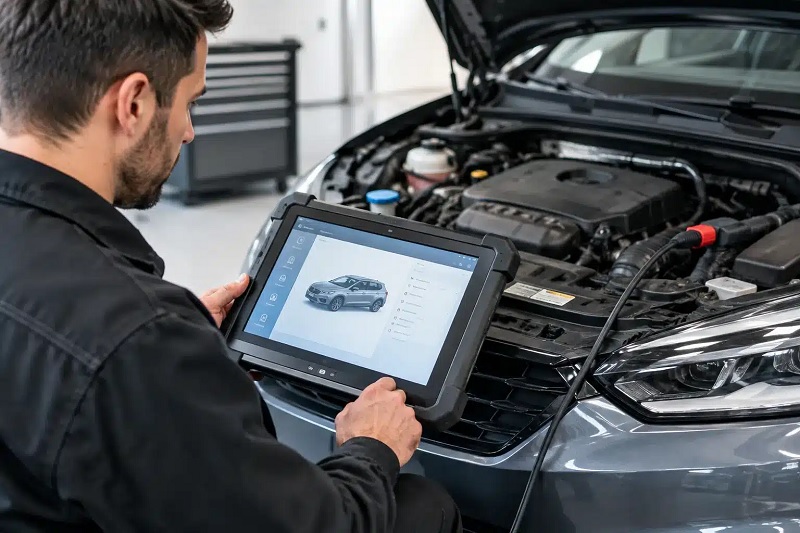
Furthermore, modern diagnostic tools allow technicians to record live data streams while driving the vehicle. By setting up the software to monitor specific sensors—such as cam-crank correlation or oxygen sensor voltage fluctuations—the technician can drive until the ghost fault momentarily appears, capturing the exact electronic spike on a timeline graph for later analysis.
The Art of Circuit Testing and Voltage Drop Analysis
Electrical issues are the absolute kings of intermittent faults. A microscopic break inside a copper wire insulation jacket or a slightly loose pin inside a weather-pack connector can cause erratic behavior that scanners struggle to pinpoint.
To solve this, technicians must move beyond simple continuity tests and perform voltage drop testing. By placing a multimeter across a specific section of a live circuit under load, the technician can measure exactly how much electrical pressure is being lost across a connection. If a supposedly secure ground connection shows a voltage drop higher than a fraction of a volt, the corrosion hiding inside that terminal has been exposed, explaining why an electrical accessory randomly cuts out on bumpy roads.
The Crucial Role of Environmental Simulation
Because many intermittent faults are triggered by specific environmental triggers—such as extreme heat, heavy moisture, or severe mechanical vibration—technicians must occasionally become forensic scientists, recreating those exact conditions inside the service bay.
If a customer reports that their vehicle refuses to start only on freezing winter mornings, spraying the starter relay with super-cooled electronics cleaner can instantly recreate the internal thermal contraction that causes the circuit board solder to pull apart. Conversely, if a transmission controller glitches only after an hour of aggressive highway driving in the summer heat, a technician might use a specialized heat gun to gently warm individual sensors on a cold engine to see which component fails under thermal expansion.
Vibration testing is equally critical. Technicians frequently utilize rubber-malleted hand tools to gently tap on wiring harnesses, fuse boxes, and sensor housings while the engine idles. If tapping a specific relay causes the engine to stumble or stall, the internal contacts of that relay are compromised, unmasking a failing part that would have passed a standard visual inspection.
Documenting the Customer Interview as a Diagnostic Tool
Long before a vehicle is connected to a computer scanner or hoisted onto a lift, the most powerful diagnostic instrument available is a detailed conversation with the vehicle owner. Because intermittent faults do not happen in the repair shop, the driver is the primary witness to the crime.
An expert service advisor treats the customer interview like an investigation. They ask targeted, specific questions rather than accepting general statements. Exactly what speed was the vehicle traveling when the hesitation occurred? Was the air conditioning running? Had the car been driven for twenty minutes, or was it a cold start? Did the radio flicker at the exact same moment the engine stuttered?
This detailed timeline allows the technician to narrow down a massive list of potential mechanical failures to a single specific subsystem. If an electrical glitch only happens when the rear defroster is turned on, the technician immediately knows to inspect the wiring harness passing through the rubber trunk boot, saving hours of aimless diagnostic labor.
An intermittent car fault is an exercise in patience and systematic deduction. It separates mediocre parts changers from true diagnostic professionals. When a vehicle begins acting like a ghost in the machine, throwing money at random components is a guaranteed path to continued frustration. By demanding rigorous data analysis, environmental simulation, and meticulous electrical testing, vehicle owners can ensure that their car’s hidden gremlins are hunted down, exposed, and permanently eradicated.