How Vehicle Sensors Enable Advanced Driver Assistance Systems Today
Modern vehicles are no longer just mechanical machines. They are intelligent systems that continuously sense, interpret, and respond to their surroundings. At the heart of this transformation are vehicle sensors, which make today’s Advanced Driver Assistance Systems (ADAS) possible. These technologies are redefining safety, comfort, and driving efficiency across the automotive industry.
Understanding Advanced Driver Assistance Systems (ADAS)
Advanced Driver Assistance Systems are electronic technologies designed to support drivers in real time. They enhance awareness, reduce human error, and help prevent accidents by combining data from multiple sensors with onboard software.
Common ADAS features include:
- Adaptive cruise control
- Lane departure warning and lane keeping assist
- Automatic emergency braking
- Blind spot detection
- Parking assistance
None of these features would function without a sophisticated network of sensors constantly monitoring the vehicle’s environment.
The Core Role of Vehicle Sensors in ADAS
Vehicle sensors act as the eyes, ears, and reflexes of modern cars. They gather real-world data, convert it into digital signals, and feed it to control systems that make split-second decisions.
Their primary responsibilities include:
- Detecting nearby vehicles, pedestrians, and obstacles
- Measuring speed, distance, and relative motion
- Monitoring lane markings and road boundaries
- Tracking vehicle position and driver behavior
Accurate sensor data is the foundation of every reliable ADAS function.
Types of Sensors Powering ADAS Technology
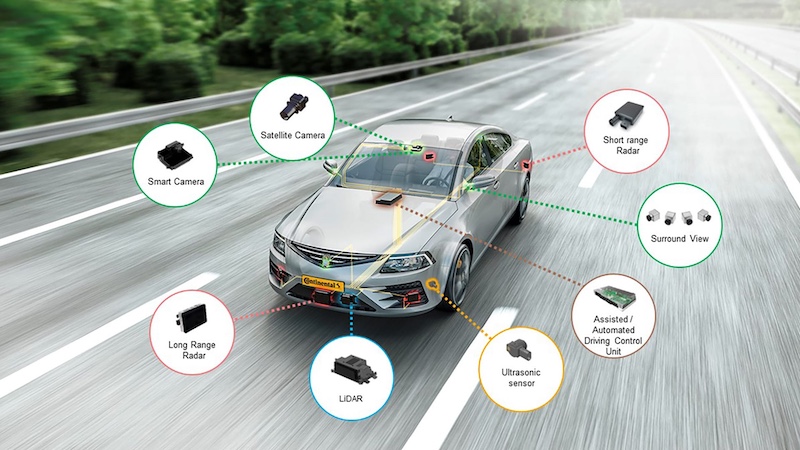
Radar Sensors
Radar sensors use radio waves to detect objects and measure their distance and speed, even in poor visibility conditions such as fog or rain. They are critical for adaptive cruise control and collision avoidance systems.
Camera Sensors
Cameras provide high-resolution visual data. They recognize lane markings, traffic signs, pedestrians, and other vehicles. Camera-based systems are especially effective for lane-keeping and traffic sign recognition.
LiDAR Sensors
LiDAR uses laser pulses to create a detailed 3D map of the vehicle’s surroundings. While still emerging in mainstream vehicles, LiDAR offers exceptional accuracy for object detection and depth perception.
Ultrasonic Sensors
Ultrasonic sensors operate at close range and are mainly used for parking assistance. They detect nearby obstacles during low-speed maneuvers.
Inertial and Position Sensors
These sensors track vehicle motion, acceleration, and orientation. They support stability control systems and enhance navigation accuracy.
Sensor Fusion: Turning Data into Decisions
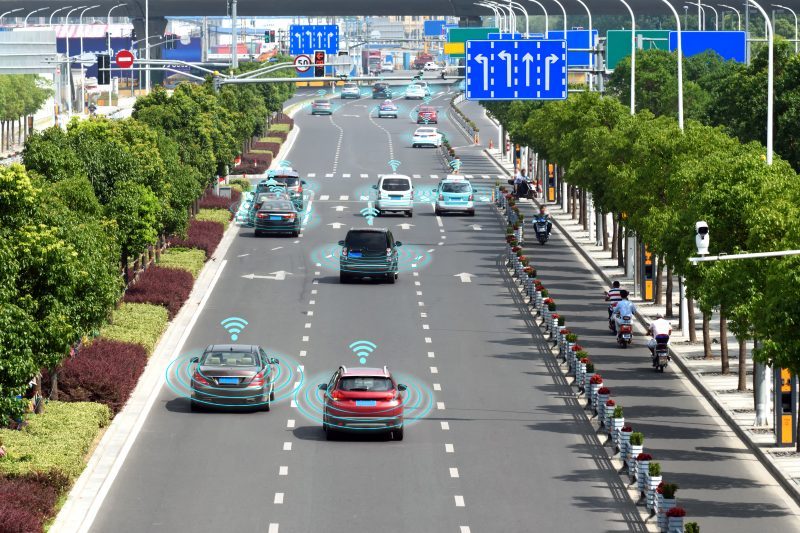
Individual sensors have limitations, but ADAS overcomes this through sensor fusion. This process combines data from multiple sensor types to create a more accurate and reliable understanding of the environment.
Benefits of sensor fusion include:
- Reduced false alerts
- Improved object detection accuracy
- Better performance in complex traffic conditions
- Enhanced redundancy for safety-critical systems
By cross-verifying information, vehicles can respond more intelligently to real-world scenarios.
How Sensors Improve Road Safety
Vehicle sensors directly contribute to accident prevention and driver protection. They detect hazards faster than human reflexes and can intervene when necessary.
Key safety improvements include:
- Early collision warnings
- Automatic braking during emergencies
- Assistance during lane drifting or sudden steering
- Reduced blind-spot-related accidents
These systems are particularly effective in urban traffic, where reaction times are critical.
The Path Toward Semi-Autonomous and Autonomous Driving
ADAS is a stepping stone toward higher levels of vehicle automation. As sensor accuracy improves and computing power increases, vehicles are becoming capable of handling more driving tasks independently.
Current trends show:
- Increased use of AI-driven sensor interpretation
- Wider adoption of multi-sensor architectures
- Continuous software updates enhancing sensor performance
Vehicle sensors will remain central to the evolution of autonomous mobility.
Challenges in Sensor-Based ADAS Systems
Despite rapid advancements, challenges remain:
- Sensor performance in extreme weather
- Calibration and maintenance requirements
- Cost and integration complexity
- Data processing latency
Manufacturers continue to refine sensor designs and algorithms to address these limitations.
The Future of Vehicle Sensors in ADAS
Next-generation sensors are expected to be:
- Smaller and more energy-efficient
- More affordable for mass-market vehicles
- Capable of higher-resolution perception
- Better integrated with artificial intelligence systems
These improvements will make advanced safety features standard rather than optional.
Frequently Asked Questions (FAQs)
How do vehicle sensors differ from traditional car safety features?
Traditional safety features are passive, while vehicle sensors actively monitor surroundings and respond in real time.
Can ADAS sensors function at night or in bad weather?
Yes, especially radar and LiDAR sensors, which are designed to operate in low visibility conditions.
Do vehicle sensors replace the need for a driver?
No, ADAS supports the driver but does not eliminate the need for human supervision in most vehicles today.
How often do ADAS sensors need calibration?
Calibration is typically required after accidents, windshield replacement, or suspension adjustments.
Are sensor-based systems reliable in heavy traffic?
Sensor fusion improves reliability, making ADAS effective even in dense traffic environments.
Do all cars with cameras have ADAS?
Not necessarily. Cameras must be paired with specific software and control systems to enable ADAS functions.
Will future vehicles rely on a single sensor type?
No, future systems will continue using multiple sensor types to ensure accuracy, redundancy, and safety.