How Modern Testing Methods Help Manufacturers Improve Auto Part Quality
The modern automobile is not merely a mode of transportation; it is a highly advanced, rolling computer network composed of roughly thirty thousand distinct components. From high-voltage battery modules and microprocessors to heavy-duty suspension linkages and forged engine internals, these parts must operate in perfect synchronization under some of the most hostile physical conditions imaginable. When a single component fails, the consequences ripple outward, resulting in frustrating breakdowns, costly manufacturer recalls, and potentially catastrophic safety hazards on the highway.
Historically, quality control in the automotive industry was largely reactive. Manufacturers relied heavily on batch testing, visually inspecting parts as they came off the assembly line or destructively testing a small sample to represent an entire production run. Today, the demands for lighter, stronger, and more complex vehicle architectures have rendered these traditional methods obsolete. To guarantee absolute reliability, automakers and parts suppliers have embraced a new era of highly sophisticated, predictive, and non-destructive testing methodologies. These modern techniques allow engineers to see inside solid metal, simulate years of environmental abuse in a matter of weeks, and eliminate manufacturing anomalies before a part ever reaches a vehicle.
The Shift Toward Non-Destructive Testing
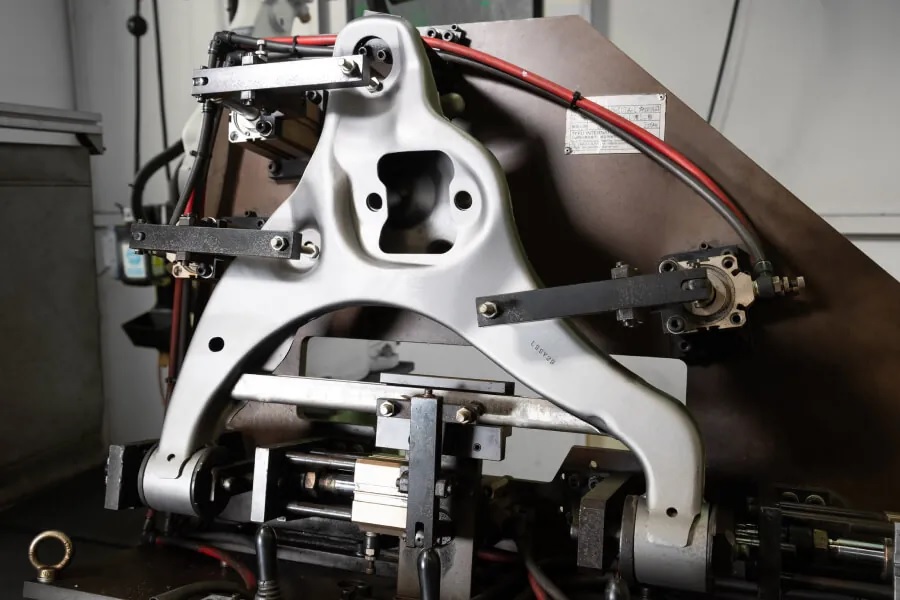
For decades, the standard method for determining the ultimate strength of an automotive component was to physically destroy it. Engineers would put a steel control arm in a hydraulic press and crush it until it snapped, measuring the force required to break it. While this provided valuable data about the batch, it obviously destroyed the part in the process. The revolutionary shift in modern quality control is the widespread adoption of Non-Destructive Testing (NDT), which allows manufacturers to scrutinize the structural integrity of every single production part without altering or damaging it.
X-Ray Computed Tomography (CT) Scanning
Originally developed for the medical field, CT scanning has become one of the most powerful tools in automotive manufacturing. When producing complex cast aluminum components, such as engine blocks, transmission housings, or the massive gigacast chassis parts used in modern electric vehicles, the primary threat is internal porosity. Microscopic air bubbles can become trapped inside the molten metal as it cools, creating invisible weak points that could eventually fracture under stress.
Industrial CT scanners utilize high-powered X-rays to capture thousands of two-dimensional cross-sections of a solid metal part. Powerful software then stitches these images together to create a flawless three-dimensional digital replica of the part’s interior. This allows quality control engineers to virtually slice the part open, actively hunting for micro-voids, cracks, or density variations hidden deep beneath the surface. If a casting defect is detected, the part is instantly flagged and melted down for recycling, guaranteeing that only structurally perfect components make it to the assembly line.
High-Frequency Ultrasonic Inspection
As automakers push to reduce vehicle weight to improve fuel economy and battery range, they are increasingly relying on advanced composites like carbon fiber and industrial adhesives rather than traditional steel and welds. Inspecting these multi-layered materials requires a different approach. Ultrasonic testing equipment sends high-frequency sound waves deep into the component and measures the exact time it takes for the echo to return. If the sound wave hits an internal delamination in a carbon fiber panel or an air gap inside a structural adhesive bead, the echo bounces back prematurely. This provides engineers with an immediate, highly accurate map of internal flaws, ensuring that lightweight components offer the exact same crash protection as the heavy steel they are replacing.
Accelerating Time Through Environmental Simulation
Automotive parts are subjected to brutal environmental extremes. A vehicle might spend its winters navigating the salted, freezing roads of the American Midwest and its summers baking in the relentless heat of the Southwest. Manufacturers cannot wait ten years to see how a new plastic compound or electrical connector will hold up to this abuse, so they utilize advanced environmental simulation to artificially accelerate the aging process.
Thermal Shock and Climatic Chambers
Modern vehicles rely heavily on complex sensor suites and delicate microelectronics mounted on the exterior of the vehicle for advanced driver assistance systems. These components must survive extreme, rapid temperature fluctuations. In a testing laboratory, parts are placed inside aggressive thermal shock chambers. A component might be held at negative forty degrees Fahrenheit for an hour, and then instantly transferred via an automated mechanical basket into a chamber baking at two hundred and fifty degrees. This brutal cycle forces the dissimilar materials—like the plastic housing, metal circuitry, and rubber weather seals—to expand and contract violently. If a seal fails and allows moisture to penetrate the circuitry, the manufacturer knows they must redesign the housing before the part goes into mass production.
Salt Spray and Corrosion Resistance
The battle against rust is a relentless challenge for automotive engineers. To test the efficacy of new zinc coatings, paints, and anti-corrosive treatments, bare metal parts and assembled sub-components are locked inside highly corrosive salt spray chambers. These machines atomize a concentrated saline solution into a thick, continuous fog, keeping the parts wet with corrosive brine for thousands of consecutive hours. By carefully monitoring how and where oxidation begins to form, metallurgists can adjust their chemical treatments to ensure that critical suspension and frame components will survive a lifetime of exposure to road salt and coastal humidity.
Artificial Intelligence and Machine Vision on the Assembly Line
Human visual inspection is inherently flawed. Even the most highly trained quality control worker will eventually suffer from eye fatigue after staring at thousands of identical parts passing by on a fast-moving conveyor belt. To eliminate human error, the automotive industry has heavily integrated Automated Optical Inspection (AOI) powered by advanced artificial intelligence.
Modern assembly lines are equipped with arrays of high-speed, high-resolution cameras that capture dozens of images of a part from multiple angles in a fraction of a second. These images are instantly processed by deep learning algorithms that have been trained on millions of reference photos. The AI can detect a missing thread on a bolt, a misaligned rubber gasket, or a microscopic scratch on a painted surface with absolute, unwavering precision. Because the AI never blinks and never gets tired, it ensures a level of manufacturing consistency that was previously impossible. Furthermore, the AI constantly analyzes this visual data to identify emerging trends. If the system notices that a specific robotic welder is slowly beginning to drift a millimeter off target, it alerts the maintenance team to recalibrate the robot before it actually produces a defective part.
Vibration and High-Cycle Fatigue Testing
An automobile is a highly dynamic machine, constantly subjected to severe vibrations from the engine, the transmission, and the imperfections of the road surface. Over time, these relentless vibrations can cause metal fatigue, causing brackets to snap and fasteners to vibrate loose.
This challenge has been heavily amplified by the transition to electric vehicles. Because EVs lack the masking noise and vibration of a combustion engine, any slight rattle or hum from a component is immediately noticeable to the driver. Additionally, electric motors deliver massive amounts of instantaneous torque, putting sudden, violent stress on the drivetrain and suspension components.
To ensure durability, engineers bolt automotive parts to electrodynamic multi-axis shaker tables. These massive hydraulic and magnetic machines simulate the exact vibrational frequencies recorded from thousands of miles of real-world driving on potholed roads and cobblestone streets. A prototype steering knuckle or battery mounting bracket might be subjected to tens of millions of violent vibration cycles in a matter of days. If the metal fractures or the mounting points fail during this high-cycle fatigue testing, the engineers add strategic structural ribbing or increase the material thickness to eliminate the weak point.
The Digital Twin and Virtual Testing
Perhaps the most significant advancement in modern automotive testing happens before a single physical part is ever manufactured. Using a process known as Finite Element Analysis, engineers create a digital twin of an automotive component inside a highly sophisticated physics engine.
Before committing millions of dollars to tooling and steel casting molds, the software subjects this digital part to thousands of simulated stress tests. The computer calculates exactly how the part will deform in a high-speed crash, how air will flow around it to cool it, and where the natural stress concentrations will occur. By allowing algorithms to virtually break the part thousands of times, engineers can endlessly tweak the digital geometry, shaving off unnecessary weight while reinforcing critical stress zones. By the time the first physical prototype is actually built, it is already structurally optimized, drastically reducing the physical testing timeline and bringing higher quality components to the market faster than ever before.
The relentless pursuit of automotive reliability has transformed part manufacturing into a highly exact science. By replacing guesswork and destructive sampling with precision digital modeling, artificial intelligence, and non-destructive analysis, the industry has fundamentally raised the baseline for quality. These modern testing methods operate entirely behind the scenes, yet they are the primary reason modern vehicles can safely and reliably navigate the world’s most punishing environments for hundreds of thousands of miles.