How to Research Common Mechanical Issues Before Choosing an Older Car
Stepping into the used car market with a modest budget is an exercise in cautious optimism. There is a distinct, undeniable thrill in finding a clean, well-kept vehicle that costs a fraction of its original sticker price. Whether you are searching for a rugged late-nineties Japanese SUV, a reliable early-2000s commuter sedan, or a stylish older European coupe, buying an older vehicle can be an exceptionally smart financial move. However, that optimism can quickly evaporate into expensive regret if you fail to do your homework before exchanging cash for the title.
Every mass-produced vehicle model has an invisible pedigree written not in its sales brochures, but in owner forums, diagnostic bays, and service bulletins. Over time, recurring design flaws, weak component tolerances, and expensive engineering oversights reveal themselves. Researching these common mechanical issues before you ever schedule a test drive allows you to separate bulletproof daily drivers from rolling financial sinkholes. Master the art of automotive pre-purchase research, and you will navigate the used car market with the confidence of an experienced mechanic.
Diving Deep into Specialized Owner Communities
The absolute best place to uncover the true personality and mechanical weaknesses of an older vehicle is not a glossy automotive review written when the car was brand new. Journalists driving a brand-new vehicle for a week-long press junket rarely experience the insidious oil leaks, failing transmission solenoids, or rotting wiring harnesses that manifest at one hundred and fifty thousand miles. To find that data, you have to go straight to the people who wrench on, modify, and drive these cars every single day.
Specialized owner forums and digital enthusiast groups are gold mines of honest, unfiltered long-term data. If you are looking at a specific generation of a vehicle, search for community boards dedicated entirely to that model. Once inside, bypass the cosmetic modification threads and head straight for the mechanical and technical sections.
Look for pinned threads detailing common failure points or buyer guides. Enthusiasts love to catalog their pain, and these forums often feature comprehensive, community-vetted checklists detailing every single component that tends to break on that specific chassis. Pay close attention to the mileage milestones mentioned in these threads. If multiple long-term owners report head gasket failures right around the one-hundred-and-twenty-thousand-mile mark, you immediately know what expensive preventative maintenance you will be facing if you purchase a vehicle sitting at one hundred and ten thousand miles.
Translating Technical Service Bulletins and Recalls
While enthusiast forums provide the anecdotal human element of vehicle ownership, official regulatory data provides the empirical proof. Before investing in an older car, you must investigate its history through official channels maintained by safety and transport authorities.
Vehicle recalls are mandatory safety repairs that manufacturers are legally required to fix free of charge, regardless of the vehicle’s age or how many owners it has had. However, not all owners bother to take their cars in for recall work. By plugging the vehicle’s unique Vehicle Identification Number into an official search database, you can instantly verify whether critical recalls—such as exploding airbag inflators, failing ignition switches, or corroded subframes—have actually been performed.
Beyond official safety recalls, look for Technical Service Bulletins (TSBs). TSBs are official instructional notices sent by automakers to their dealership service networks when a specific mechanical issue occurs repeatedly in the field. Unlike a recall, TSBs do not always involve safety hazards, so manufacturers do not notify the public. They simply instruct technicians on how to fix a recurring design flaw. If a particular model year has twenty different TSBs addressing erratic transmission shifting or premature timing chain wear, you have uncovered a glaring pattern of engineering instability that should make you think twice before buying.
Recognizing the Difference Between Consumables and Catastrophes
As you dig through forums and repair histories, you will encounter a massive laundry list of complaints for every vehicle you research. The secret to effective pre-purchase research is learning how to separate normal, expected wear-and-tear items from catastrophic design failures.
Every car requires routine maintenance. Suspension bushings degrade, brake pads wear thin, alternators fail after a decade of service, and rubber coolant hoses rot. These are consumable components, engineered to sacrifice themselves over time. Finding a forum thread complaining that an eighteen-year-old sedan needed a new alternator and a fresh set of shocks is completely normal; it does not make the car unreliable.
Catastrophic mechanical failures, on the other hand, are systemic design flaws that threaten the core viability of the powertrain. This includes issues like unresolvable cylinder bore scoring, plastic coolant fittings that melt and dump the engine’s water supply, or automatic transmissions built with undersized clutch packs that inevitably shred themselves. When your research uncovers a fatal flaw that requires an engine teardown or a five-thousand-dollar transmission replacement just to keep the car moving, that vehicle should be immediately disqualified from your shopping list, unless the previous owner can definitively prove that the updated, revised replacement part has already been installed.
Evaluating Parts Availability and Aftermarket Support
A mechanical issue that is relatively simple to fix can still become a financial nightmare if the required replacement parts are discontinued, backordered, or exorbitantly expensive. When researching an older vehicle, you must evaluate the health of its broader supply chain.
Vehicles produced in massive numbers by mainstream global manufacturers generally enjoy robust parts support. Aftermarket companies build millions of alternators, water pumps, sensors, and suspension arms for these popular models, driving prices down through healthy competition.
Conversely, if you are researching a low-production sports car, an orphaned luxury brand that went out of business, or a rare import model, finding even basic mechanical components can turn into an agonizing treasure hunt. Before buying, spend twenty minutes browsing online parts catalogs. Search for critical maintenance items like a radiator, a steering rack, or a set of head gaskets for the specific year and model you are considering. If those parts show up as permanently out of stock or carry astronomical price tags, you must factor that severe logistical friction into your purchasing decision.
Cross-Referencing Research with a Physical Inspection
All the internet research in the world is ultimately just preparation for the physical reality of the vehicle sitting in front of you. Once you have studied the common failure points of your target car, you must weaponize that knowledge during your in-person inspection.
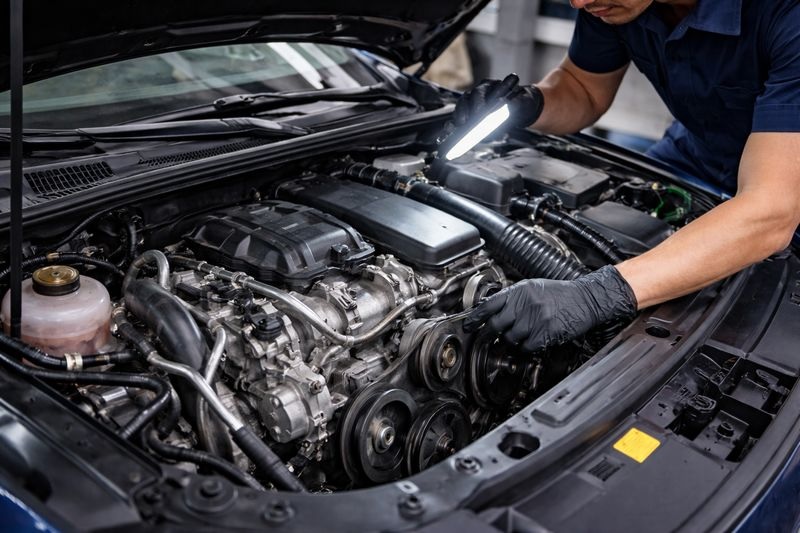
If your forum research revealed that a specific engine suffers from chronic oil leaks at the VTEC spool valve or the rear main seal, bring a flashlight and inspect those exact physical locations. If owners universally complain about sagging driver-side seat rails or brittle dashboard plastics cracking near the defroster vents, check those specific interior areas during your test drive.
Arming yourself with model-specific knowledge completely alters the dynamic between you and the seller. When a private seller or a used car lot manager realizes you know the exact mechanical quirks, common leak points, and service intervals of the vehicle better than they do, the vague sales pitch evaporates. You can intelligently negotiate the asking price downward to account for the impending maintenance items your research uncovered, ensuring that your affordable used car remains a smart financial investment for years to come.